

Edinburgh’s Enlightenment & Industrial Age: A City of Ideas and Innovation
Travel through Enlightenment Edinburgh—where brilliant minds met grand architecture. Discover how the city became the “Athens of the North” during a century of bold ideas and beautiful planning.

A Golden Age of Thought — The Scottish Enlightenment
Big Thinkers, Big Ideas
The Enlightenment transformed Edinburgh into a center of intellectual life in Europe.
Major figures included:
David Hume – philosophy and skepticism
Adam Smith – modern economics
James Hutton – father of geology
Coffeehouses and salons buzzed with debate, discovery, and discourse.
Where to See It Today
Visit The Writers' Museum and National Museum of Scotland
Walk along the Royal Mile, where Enlightenment minds once lived and lectured
Urban Renewal — The Rise of New Town
A Vision for a Modern City
Designed in 1767, New Town was a response to:
Overcrowded, dark Old Town
Enlightenment values of order, symmetry, and reason
Features of New Town:
Georgian townhouses
Wide, airy streets
Squares named after Enlightenment ideals and royalty (e.g., Charlotte Square)
Modern Elegance for a Modern Era
Walk Princes Street, George Street, and Queen Street for architecture lovers’ delight
Stop by Charlotte Square, considered one of the finest Georgian squares in Europe
Education, Science & Industry
Foundations of Knowledge
The University of Edinburgh became a beacon for medicine, science, and philosophy
By the 19th century, Edinburgh’s reputation in medical education was globally recognized
The Industrial Edge
While not as heavily industrialized as Glasgow, Edinburgh contributed through:
Publishing and printing
Brewing and distilling
Advances in engineering and infrastructure
Travel Tip — Experience Enlightenment Edinburgh
Tour New Town with a local guide or self-guided app
Explore Enlightenment-themed exhibits at the National Library of Scotland
Visit the statue of David Hume on the Royal Mile—and rub his toe for wisdom!
Conclusion: Edinburgh’s Brightest Century
The Enlightenment and Industrial Age turned Edinburgh from a medieval stronghold into a modern, intellectual capital. With its thinkers, its beauty, and its ambition—it earned its title as the "Athens of the North."
Curious about Edinburgh’s rich history or dreaming of your own European adventure? Let’s make it happen. I’d love to help you plan a personalized journey that brings your travel dreams to life—one historic cobblestone at a time. Let’s connect!

Edinburgh’s Renaissance & Reformation: A City Transformed (16th–17th Century)
Step into Edinburgh’s most transformative era. From the rise of Holyrood Palace to the fiery sermons of John Knox, the Renaissance and Reformation shaped a city of power, print, and spiritual revolution.
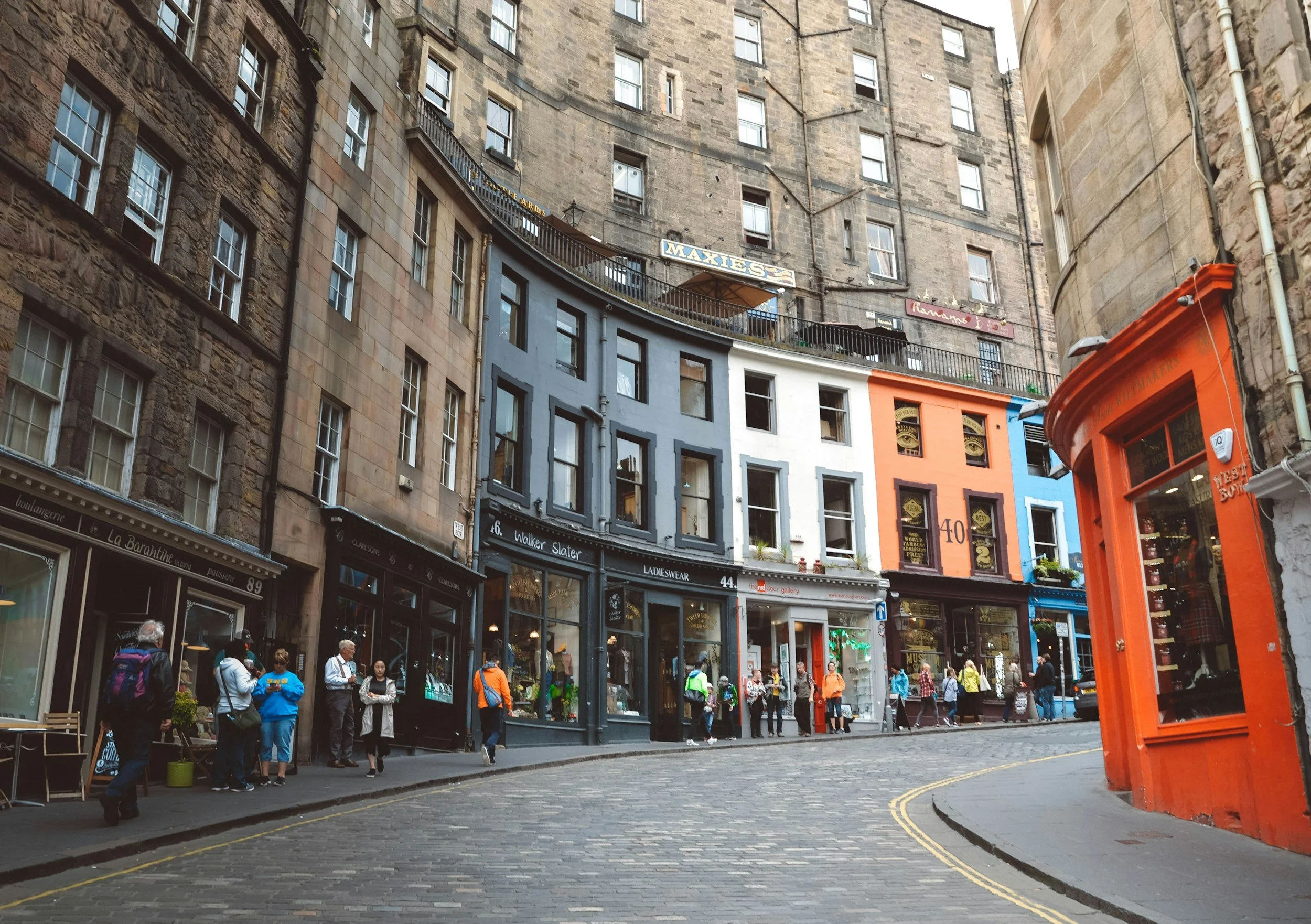
Royal Ambition — The Rise of Holyrood Palace
From Abbey to Palace
In the early 16th century, James IV began construction on Holyrood Palace, expanding the site beside the historic abbey.
The palace became a symbol of royal grandeur, welcoming monarchs like:
James V, who completed much of its Renaissance architecture
Mary, Queen of Scots, whose dramatic life unfolded within its walls
A Stage for Royal Drama
Holyrood Palace wasn’t just a residence—it was a political and personal stage:
The murder of David Rizzio (Mary’s secretary) in 1566 shocked the court.
Royal weddings, plots, and councils were shaped here.
The Power of the Printed Word
Scotland’s First Printing Press
In 1508, printers Walter Chepman and Andrew Myllar introduced Scotland’s first press in Edinburgh.
This revolutionized literacy, spreading:
Religious texts
Political pamphlets
Poetry and literature to a growing public
Fueling Reform and Identity
The press played a major role in spreading Protestant Reformation ideas, including:
Sermons by John Knox
Translations of the Bible and polemics against Catholicism
A City at the Heart of the Scottish Reformation
John Knox and St Giles’ Cathedral
Edinburgh became the intellectual and religious heart of the Scottish Reformation.
John Knox, a fiery reformer, preached at St Giles’ Cathedral, pushing for a Protestant Scotland.
His sermons sparked:
Icon-smashing mobs
Massive religious and political shifts
The rise of Presbyterianism
Lasting Change
The Reformation reshaped the city’s architecture, institutions, and daily life:
Monasteries were closed
Holyrood Abbey was left in ruins
The Kirk replaced the crown as the people’s power
Travel Tip — Walking the Renaissance Roots
Visit Holyrood Palace for royal chambers, artifacts, and scandalous stories
Walk to St Giles’ Cathedral and imagine Knox preaching to packed crowds
Stop by The Museum of Edinburgh to see early books and printing relics
Conclusion: A City Reborn
The 16th and 17th centuries redefined Edinburgh—not just as a seat of monarchy, but as a crucible of change. From printed revolutions to religious reform, every stone tells the story of a city on the edge of modernity.
Curious about Edinburgh’s rich history or dreaming of your own European adventure? Let’s make it happen. I’d love to help you plan a personalized journey that brings your travel dreams to life—one historic cobblestone at a time. Let’s connect!

Edinburgh Before It Was Edinburgh
Before the festivals and the Fringe, Edinburgh was a fortress on a hill. Dive into the city’s rise from prehistoric settlement to medieval powerhouse—where castles, abbeys, and burgh rights shaped Scotland’s capital.

Din Eidyn – The Hill Fort Origins
Long before it was a city, Din Eidyn stood tall as a 7th-century fort.
Positioned on a volcanic crag, it provided natural defenses and strategic visibility.
The name would later evolve into Edinburgh—a nod to its ancient Brythonic roots.
The Rise of Royal Edinburgh
Holyrood Abbey – A Sacred Foundation
In 1128, King David I founded Holyrood Abbey after a legendary hunting vision.
It quickly became a royal favorite, eventually forming the foundation of Holyrood Palace.
The Abbey helped establish Edinburgh as a spiritual and political hub.
Edinburgh Becomes a Burgh
By 1125, Edinburgh was officially named a royal burgh, granting it trading rights.
This marked its transformation from settlement to center of commerce and governance.
Burgh status brought in craftsmen, traders, and nobility, shaping its medieval character.
Why It Matters for Travelers
Walking Through Living History
When you visit today, you’re walking where:
Warriors once defended hill forts
Monks built abbeys beside hunting trails
Medieval merchants set up shop
Places like Edinburgh Castle and Holyrood Palace are more than just landmarks—they’re living relics of a city that grew from stone and story.
Wrap-Up: From Fort to Kingdom
Edinburgh's early history is more than a backdrop—it's a timeline you can walk. From ancient strongholds to medieval trade centers, the city has always been a place of rising power and enduring presence.
Curious about Edinburgh’s rich history or dreaming of your own European adventure? Let’s make it happen. I’d love to help you plan a personalized journey that brings your travel dreams to life—one historic cobblestone at a time. Let’s connect!